
If you work with lifting equipment, cranes or mechanical handling systems, the term “competent person” will appear regularly in legislation, inspection reports and site documentation.
A competent person is not simply a job title. In health and safety law it carries specific meaning. Understanding what it means in practice is essential for anyone responsible for lifting operations in the workplace.
While not intended as a substitute for independent health and safety advice, here is an overview of the definition of a competent person from Metreel.
We’ll cover what it means in practical terms, plus how the requirements apply to the world of material handling.
The Legal Definition
The term “competent person” is not formally defined in a single piece of legislation, but it appears throughout UK health and safety law and is given a clear practical meaning by the HSE.
Under the Management of Health and Safety at Work Regulations 1999, employers are required to appoint one or more competent persons to assist them in meeting their health and safety obligations. A competent person in this context is someone with sufficient training, experience, knowledge and other qualities to enable them to assist properly.
In the context of lifting equipment, the definition becomes more precise. The LOLER Approved Code of Practice and guidance states that a competent person should have “such appropriate practical and theoretical knowledge and experience of the lifting equipment to be thoroughly examined as will enable them to detect defects or weaknesses and to assess their importance in relation to the safety and continued use of the lifting equipment.”
In short, knowledge and experience are both required. One without the other is not sufficient.
Why It Matters Under LOLER
The Lifting Operations and Lifting Equipment Regulations 1998 (LOLER) is where the competent person requirement becomes most significant for businesses using cranes, hoists, overhead beam systems and other lifting equipment.
All lifting operations involving lifting equipment must be properly planned by a competent person, appropriately supervised and carried out in a safe manner. This applies to every lifting operation, not just complex or high-risk ones.
LOLER places this responsibility on anyone who owns, operates or has control over lifting equipment. This includes all businesses and organisations whose employees use lifting equipment, whether owned by them or not. If lifting equipment is present on your site and your workers use it, you are a duty holder under LOLER and the competent person requirement applies to you.
The consequences of getting this wrong are serious. If an accident occurred and it was deemed that the person undertaking your LOLER inspection was not a competent person, the duty holder would be liable for breaking their regulatory duties.
The Two Roles A Competent Person Fulfils Under LOLER

It is worth distinguishing between two separate competent person functions that LOLER requires:
1. Planning Lifting Operations
Every lifting operation must be planned by a competent person before it takes place. BS 7121 Code of Practice for Safe Use of Cranes states that the competent person for planning lifting operations is referred to as the appointed person. The appointed person is responsible for the execution and safety of a lifting operation.
Although duties may be delegated to others, it is the appointed person who retains the responsibility of the operation.
The level of planning required is proportionate to the complexity and risk of the lift. Routine, straightforward lifts may only require a brief initial plan. A complex tandem lift involving multiple cranes demands a detailed written plan produced by a person with significant and specific competencies.
2. Thorough Examination Of Lifting Equipment
LOLER requires that lifting equipment be thoroughly examined by a competent person at specified intervals: every six months for lifting equipment and accessories used to lift people, and every 12 months for other lifting equipment, unless an examination scheme specifies otherwise.
A thorough examination is not the same as routine maintenance or a visual check. It is a systematic, detailed examination of the equipment and its safety-critical parts, carried out by a competent person who must then produce a written report meeting the requirements of LOLER Schedule 1.
What Qualifies Someone As A Competent Person?
There is no single qualification or certificate that automatically confers competent person status under LOLER. The assessment is based on the specific equipment and the specific task.
The key criteria are:
Practical and theoretical knowledge: The person must understand how the equipment works, how it can fail and what signs of wear or damage look like in practice. For a crane engineer, this means knowledge of structural integrity, load paths, wire rope condition and braking systems. For a hoist inspector, it means understanding how the lifting mechanism, brakes and limit switches interact.
Relevant experience: Theoretical knowledge alone is not enough. The person must have hands-on experience with the type of equipment being examined or the type of lifting operation being planned. The HSE defines a competent person as someone with “appropriate industry knowledge and experience working with the specific type of equipment in order to thoroughly examine to an excellent standard, identify any issues and report their findings.”
Independence and impartiality: Although the competent person may often be employed by another organisation, this is not necessary, provided they are sufficiently independent and impartial to ensure that in-house examinations are made without fear or favour. However, this should not be the same person who undertakes routine maintenance of the equipment, as they would then be responsible for assessing their own maintenance work.
What A Competent Person Is Not
It is worth being clear on the boundaries of the role.
A competent person is not simply someone who has been on a training course. Training is a component of competence, but it does not replace experience. A newly qualified person who lacks practical exposure to the equipment in question would not meet the standard.
A competent person is not the same as a general health and safety officer. A company’s H&S manager may well be competent across a range of risk areas but may not have the specific practical and theoretical knowledge required to plan a complex crane lift or carry out a thorough examination of a runway beam and hoist system.
Also, as noted above, a competent person conducting thorough examinations should not be the same individual who carries out the routine maintenance on that equipment.
Competent Person Requirements In Practice For Lifting Equipment Users
For businesses operating overhead cranes, jib cranes, monorail systems, hoists or any other lifting equipment, the practical implications are as follows.
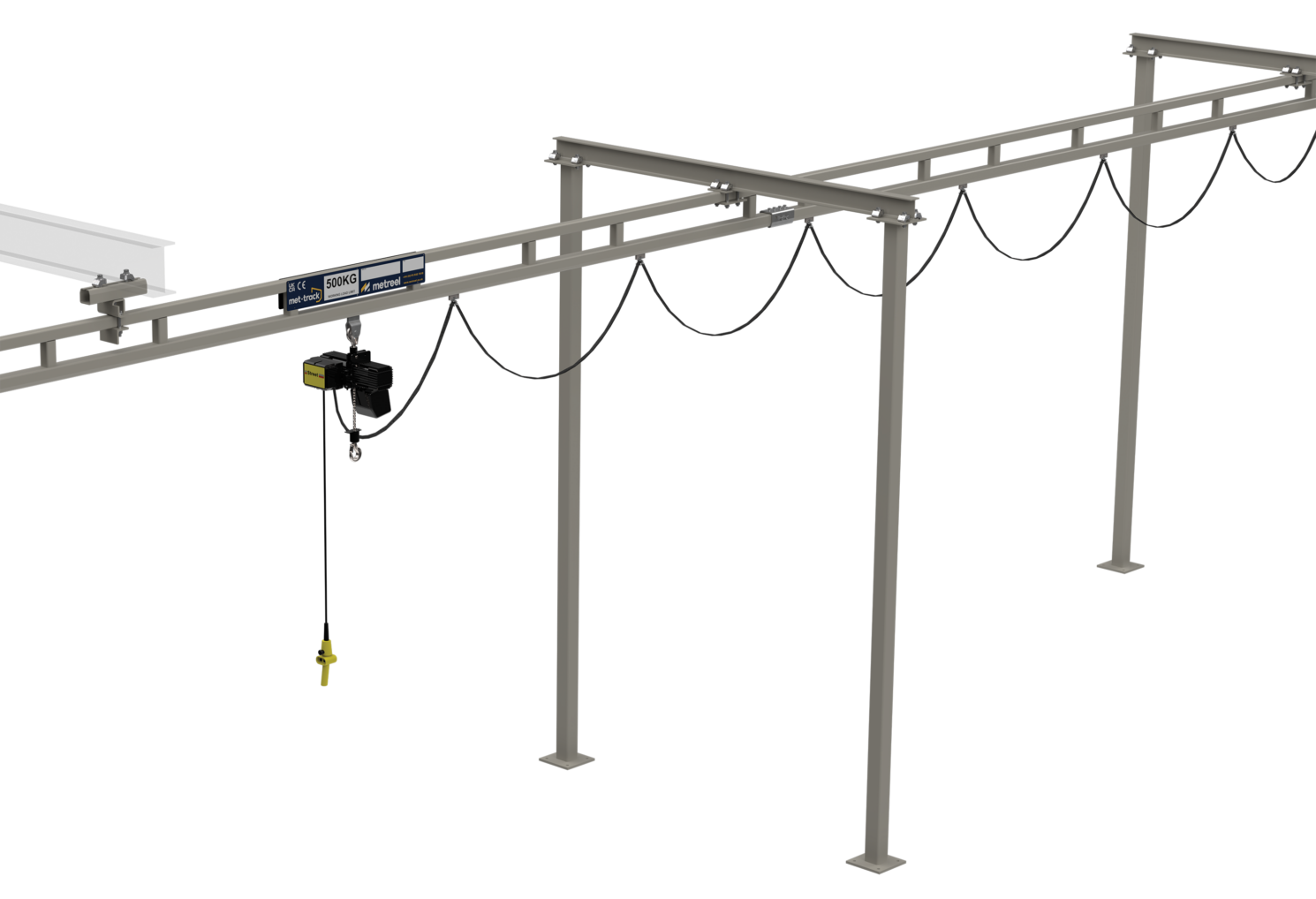
Before any lift: A competent person must plan the operation. For routine, low-risk lifts, this may be the operator themselves, provided they have the relevant training and experience. For complex or non-routine lifts, a dedicated appointed person should be involved.
Every six or 12 months: A thorough examination of all lifting equipment must be carried out by a competent person and a written report produced. The frequency depends on whether the equipment is used to lift people.
After any exceptional event: A thorough examination must also be carried out following exceptional circumstances liable to jeopardise the safety of lifting equipment, which may include major changes, modifications or replacement of critical parts.
Safe working load markings: Any lifting equipment must be clearly marked to indicate its safe working load (SWL). If the equipment is intended to lift people, the maximum number of people should be displayed alongside the SWL. The competent person carrying out the thorough examination will verify that these markings are present and accurate.
Record keeping: All thorough examination reports must be retained and made available to the HSE or relevant enforcing authority on request.
Get Advice From Our Material Handling Experts
A competent person in health and safety is someone with the right combination of practical experience and theoretical knowledge to carry out a specific task safely and effectively.
For businesses using cranes, hoists and mechanical handling systems, appointing the right competent person is not an administrative formality. It is a legal requirement with direct implications for the safety of everyone on site and the liability of the duty holder if something goes wrong.
If you have questions about LOLER compliance, safe working loads or the maintenance and inspection of lifting and handling equipment, the Metreel team is here to help.
For help on anything we’ve mentioned above, please send us a message or give us a call on 0115 932 7010.